Denier Explained
Denier is a measure of a yarn’s strength in relation to its length.High denier does not automatically mean a fabric is indestructible. The weave tightness and material quality matter too, but denier tells you how much raw material and thickness went into the yarn itself.
Fast Facts
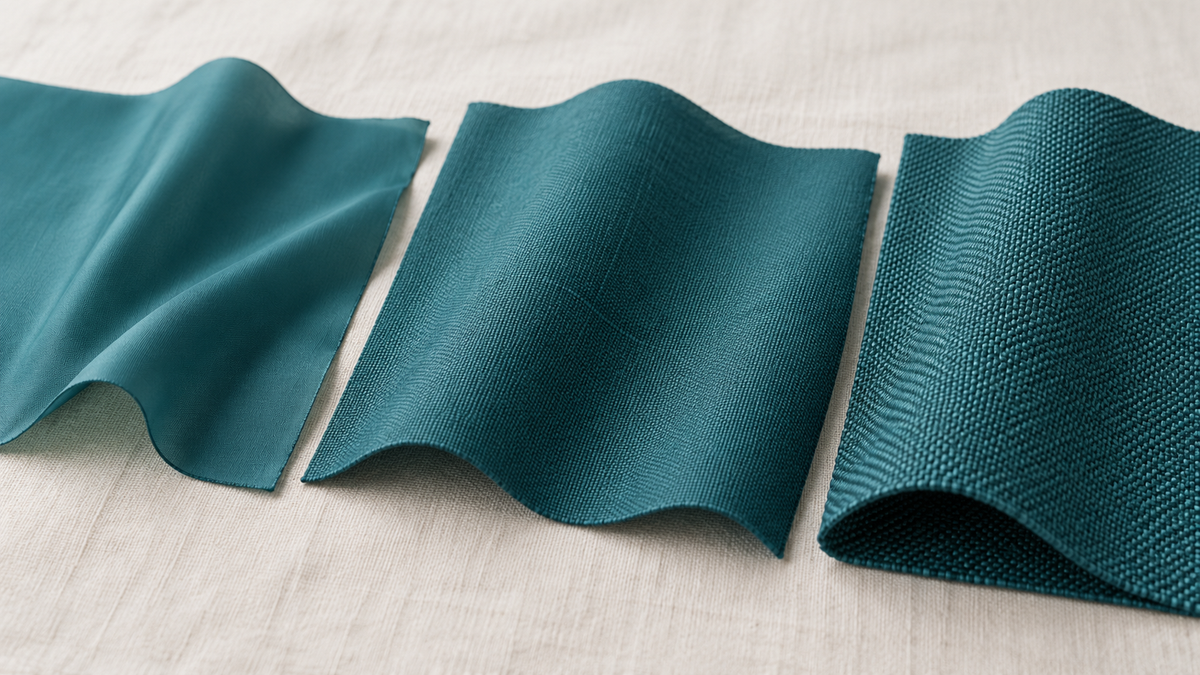
Denier, pronounced “deh-NEER,” measures a yarn’s weight for a fixed length, indicating how fine or thick it is. A single fine strand of natural silk is approximately one denier, meaning 9,000 metres of it weighs about one gram.
The D symbol
Numbers such as 210D and 600D describe yarn size, not the material itself.
Lower numbers
Lower denier means lighter yarn, generally producing finer, lighter fabric when other factors are similar.
Higher numbers
Higher denier means heavier yarn, generally giving comparable fabric more body and weight.
Materials
Denier is used for nylon, polyester, silk and other fibres. Both nylon and polyester can be 210D.
The formula
If 9,000 metres, about 5.6 miles, of nylon yarn weighs 210 grams, it is 210D nylon.
Why choose it?
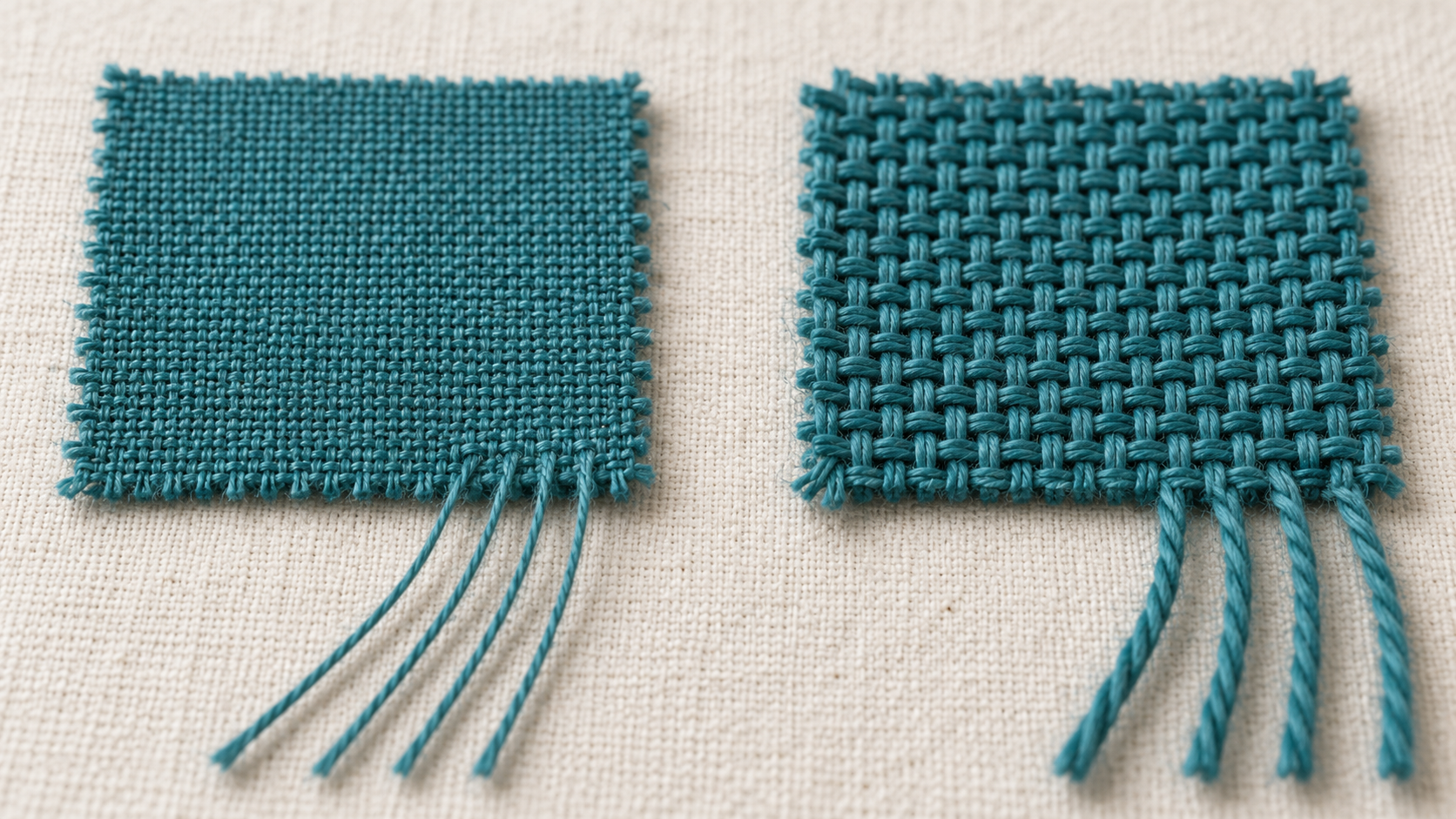
Understanding denier helps you choose between lightweight, packable fabric and something more substantial. Yarn is difficult to measure with a ruler because it is fine, flexible and can flatten under pressure. Measuring its weight over a known length gives manufacturers a consistent way to describe its size. A yarn can contain many individual fine strands, so denier does not necessarily describe a single strand.
Things to consider
Higher denier does not automatically mean stronger or better. Fibre type, yarn quality, weave and coatings all affect the finished fabric. Nylon and polyester with the same denier can feel and perform differently. Denier alone cannot establish resistance to tearing, abrasion or water, and it does not measure cushioning. A fishing-rod bag may still need padding and reinforced ends. Denier also differs from GSM, which measures the weight of one square metre of finished fabric.
Customization options
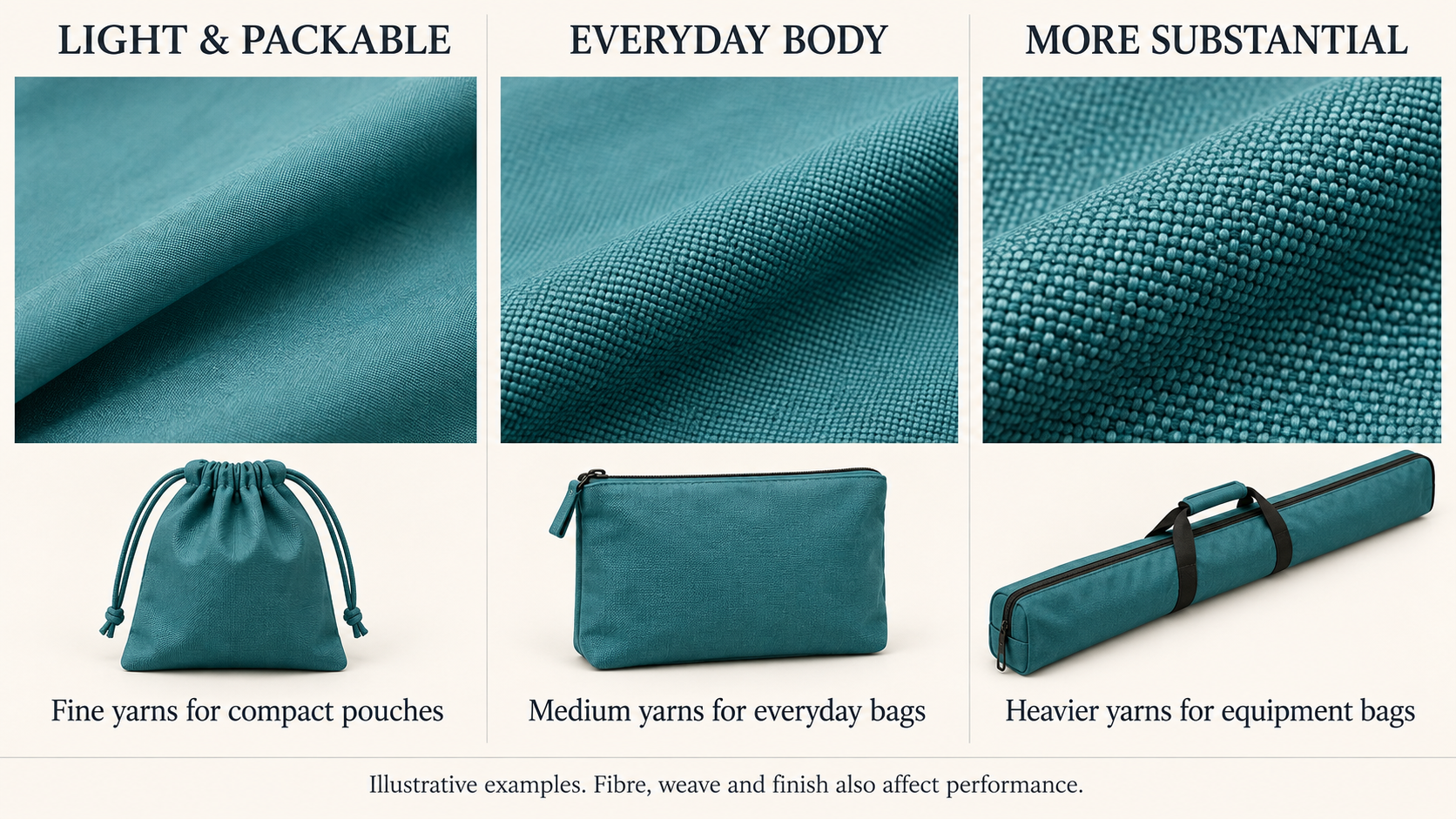
Denier can be selected alongside nylon or polyester, weave, color and finish to achieve the required balance of flexibility and body. For example, a drawstring opening needs fabric that gathers comfortably, while a long zippered equipment bag may benefit from firmer construction. Available combinations require confirmation. Comparing samples is the best way to assess the actual feel and handling.
Best suited for
Denier tells you what a fabric is built to do: resist tearing or stay ultralight. High denier does not automatically mean a fabric is indestructible. Weave tightness and material quality matter too, but denier tells you how much raw material and thickness went into the yarn itself.
Low Denier (10D to 40D): Light, packable, and soft. Used for ultralight windbreakers, sleeping bag shells, and lightweight tent canopies. It won't survive scraping against sharp rocks, but it weighs almost nothing.
Medium Denier (150D to 300D): Balanced everyday strength. Used for school lunch boxes, casual daypacks, and rainfly covers.
High Denier (500D to 1000D+): Rugged and abrasion-resistant. Used for heavy-duty travel bags, tactical gear, motorcycle jackets, and luggage bottoms that get dragged across concrete.
Need this customization for your bags?
Tell us the bag type, quantity and requirements, and we’ll help you work out the right specification.