Sewing Methods
Understand the stitches and seam finishes that shape your bag. Learn how straight stitching, overlock, reinforcement, drawstring channels and piping affect strength, appearance and everyday use.
Fast Facts
Straight stitching
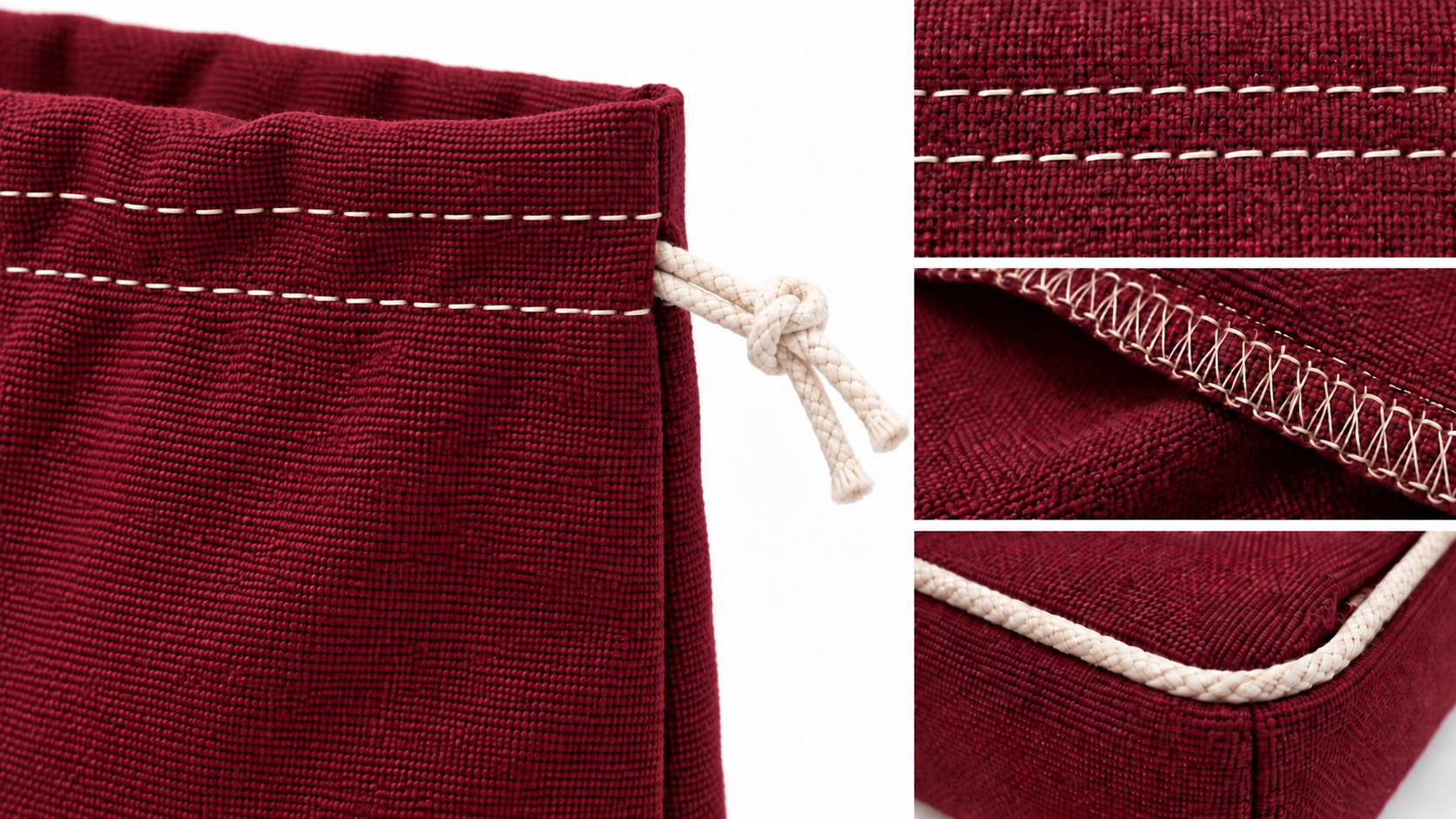
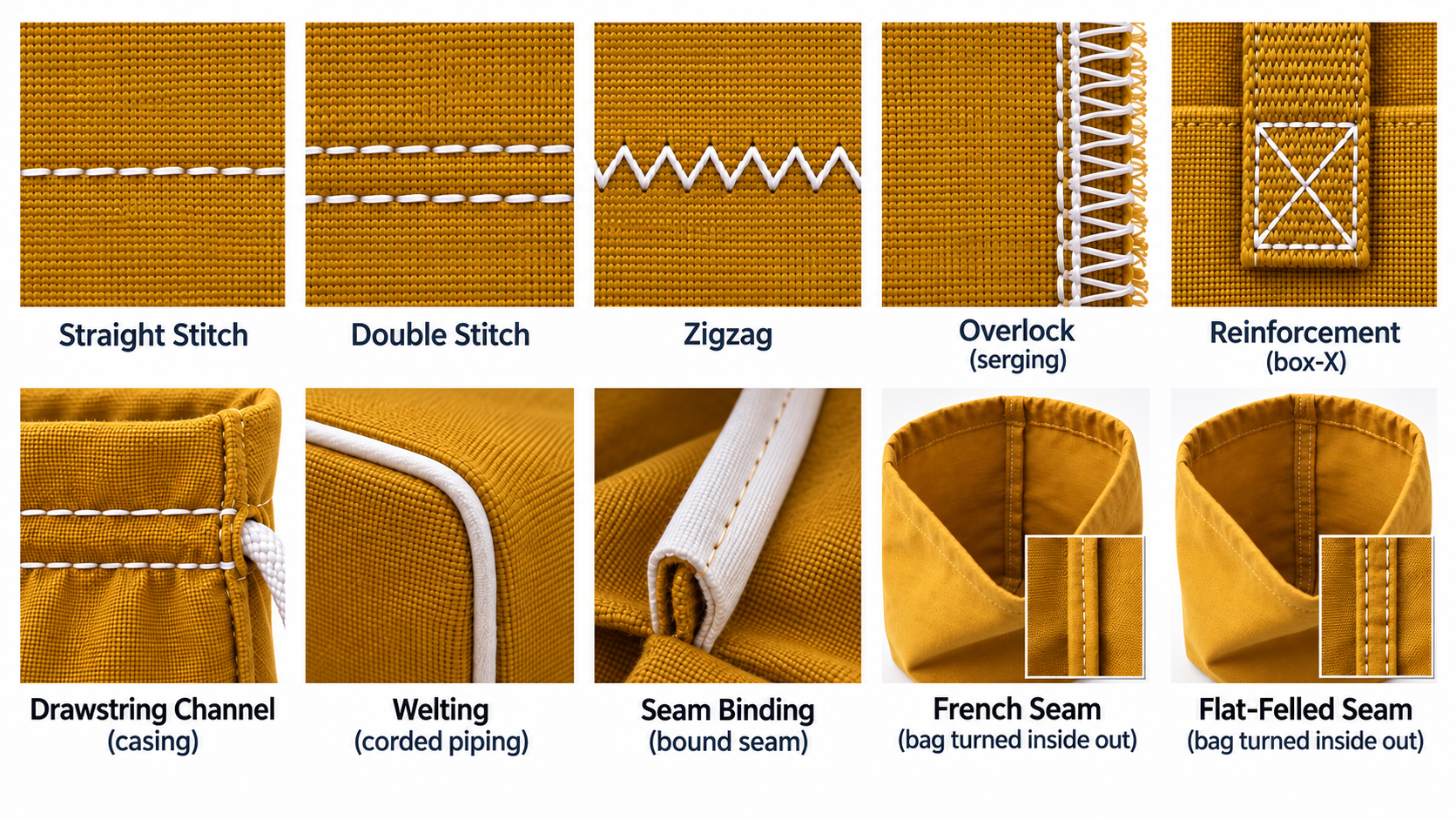
A straight stitch joins fabric with a neat line of stitches. Suppliers often call one row “single stitching.” A single-needle lockstitch commonly handles this job.
Zigzag stitching
Zigzag stitches move from side to side, allowing more stretch than straight stitching. They can also help control fraying along cut edges.
Overlock stitching
Overlock, also called serging or overedge stitching, wraps thread around fabric edges to control fraying. It differs from zigzag. Some overlock constructions also join the fabric.
Reinforced stitching
Two rows can reinforce a seam. Bar tacks pack stitches into a short bar at stress points; box-X stitching forms a rectangle with a cross inside to secure handles or tabs.
Drawstring channels
Stitching secures a folded top edge or separate fabric strip to create a tunnel, also called a casing. This guides the cord while letting it slide freely.
Piping and binding
Piping adds a raised outline along a seam, often around a cord. Binding folds a strip over raw edges to cover and protect them. The terms are often interchanged but they serve different purposes.
Why choose it?
The right sewing method helps your bag hold together, close smoothly and look tidy. A simple straight seam suits many lightweight pouches. Reinforcement supports areas that face repeated pulling. Topstitching, a visible row on the outside, holds fabric layers flat around edges and zippers.
Things to consider
More stitches do not automatically mean more strength. Closely spaced needle holes can weaken delicate fabric, while heavy thread can cause puckering. Fabric strength, thread, stitch spacing and seam allowance, the fabric between the stitching and cut edge, all matter. Keep drawstring channels roomy enough for the cord and reinforce their openings without stitching through the cord. Piping adds bulk and sewing steps; it does not guarantee a stronger seam.
Customization options
Choose matching or contrasting thread, stitch placement, reinforcement points and an edge finish. French seams enclose raw edges inside a narrow fabric fold. Flat-felled seams fold and stitch the joined edges down flat. Binding covers exposed edges with a separate strip. For piping, choose its color, thickness and placement. Your fabric and intended use will determine suitable options; we’ll need to confirm availability.
Best suited for
Lightweight gift and storage pouches often need simple seams with suitable edge finishing. Mesh laundry bags benefit from seams and reinforcement that suit the mesh structure. Choose piping for cosmetic bags or shaped pouches when you want a defined outline. Skip it when you want a soft, flexible bag that folds easily.
Need this customization for your bags?
Tell us the bag type, quantity and requirements, and we’ll help you work out the right specification.